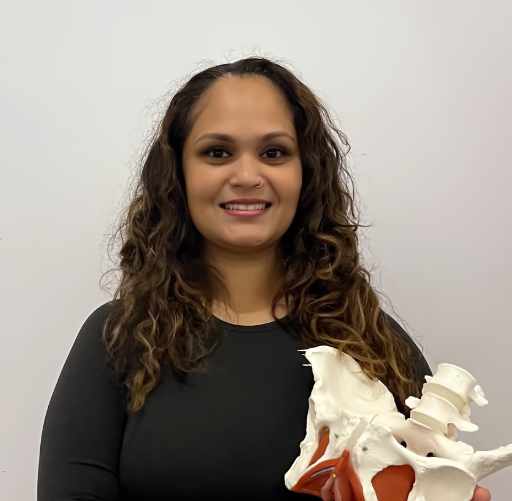
Postpartum Recovery for Real Life
Postpartum Recovery for Real Life: 5 Tasks Your Plan Should Prepare You For
Your toddler did not get lighter because you were cleared at six weeks postpartum.
The laundry baskets did not shrink. The stairs did not disappear. Your workdays, errands, school drop-offs, and family outings may have become longer and more complicated—not easier.
You may feel fine at the beginning of a task but notice leaking, pressure, heaviness, pain, fatigue, or uncertainty after more repetitions or later in the day. You may have tried Kegels or completed a general postpartum workout, yet carrying your child or getting up from the floor still feels harder than you expected.
That does not mean you failed postpartum recovery. It may mean your current plan has not progressed to match what your life is asking your body to do now.
Postpartum recovery is not a six-week finish line
The six-week postpartum visit is important, but it is not a universal readiness test for exercise, lifting, running, or the physical demands of caregiving.
The American College of Obstetricians and Gynecologists describes postpartum care as an ongoing, individualized process. ACOG also explains that the comprehensive postpartum visit is a medical appointment—not an automatic “all-clear” signal—and that recovery and support may need to continue well beyond that visit.
Your medical provider may confirm that healing is progressing appropriately while you still need time, support, or rehabilitation to rebuild capacity for specific activities. Medical clearance and functional readiness answer different questions.
This remains relevant even if you are months or years postpartum. The calendar alone cannot tell us what is causing a symptom, what your body can currently tolerate, or what your plan should include.
What does it mean to train for real life?
A real-life task asks more of you than simply being able to contract a muscle.
Depending on the activity, your body may need to manage:
Load
Repetition
Range of motion
Balance
Coordination
Breathing and pressure
Time under tension
Fatigue
Recovery between tasks
Changes in the environment
This is why one exercise—or one cue about posture, breathing, or “engaging your core”—cannot prepare every person for every task.
A useful postpartum plan should connect the work you do during exercise or rehabilitation to the activities that matter in your actual life.
Here are five examples.
1. Getting on and off the floor
Floor time is part of life for many parents. You may be playing with your child, changing a diaper, picking up toys, or trying to stand while holding something.
A floor transfer can involve hip and leg strength, mobility, balance, coordination, and the ability to shift your weight. The demands change when you are tired, moving quickly, holding a child, or working in a small space.
There is no single “correct” way every postpartum person should get off the floor. Instead, notice what makes the task easier or harder.
Does discomfort begin while lowering, kneeling, or standing? Does holding onto furniture change the task? Does it feel different at the end of the day?
Those observations provide useful context. They do not diagnose the cause, but they can help guide a more relevant assessment and plan.
2. Lifting from a low surface
Lifting a baby from a crib, moving a car seat, unloading groceries, or picking up a toy from the floor may look like one simple movement. In real life, however, the starting height, load, number of repetitions, available space, and level of fatigue all matter.
Your body may respond differently to one controlled lift than it does to repeated lifting during a busy morning.
There is also no universal lifting form that guarantees you will avoid symptoms. A strategy that works well for one person, body, or environment may not be practical for another.
Rather than trying to make every lift look perfect, consider the entire task:
What are you lifting?
Where does the movement begin?
How many times are you doing it?
What happens as you become tired?
How do you feel during the task, later that day, and the next day?
The goal is not to grade your movement. It is to understand what the task currently requires.
3. Carrying a child—and everything else
Carrying a child rarely means carrying only a child.
There may also be a bag, water bottle, groceries, stroller, or another child who needs a hand. You may be opening doors, navigating uneven ground, climbing stairs, or moving through a crowded parking lot.
A carrying task can involve load, distance, grip, balance, attention, endurance, and repeated transitions between lifting and lowering. Carrying on one side may feel different from carrying in front of your body, but that does not mean one position is always right and another is always wrong.
If symptoms appear, notice the pattern. Do they begin immediately, after a certain amount of time, when the load changes, or later in the day?
Leaking, pressure, heaviness, pain, or fatigue can be useful information. They do not automatically prove that your pelvic floor is weak, damaged, or the sole source of the problem.
4. Using stairs while carrying something
Stairs can become a very different task when you are carrying a child, managing a bag, moving quickly, or paying attention to what is happening around you.
This activity may require leg strength, balance, coordination, and the ability to tolerate repeated effort. The environment matters too. A quiet set of clinic steps is not the same as navigating stairs at home while your attention is divided.
If stairs trigger symptoms or make you feel uncertain, the answer is not automatically to stop using them—or to push through without considering what is happening.
An individualized plan may examine which part of the task is most challenging and whether adjustments to load, pace, support, strength, recovery, or the environment are appropriate.
5. Managing long outings or workdays
Sometimes one movement is not the problem. The challenge is accumulation.
You may feel comfortable early in the day but notice symptoms after several hours of standing, walking, carrying, lifting, sitting, commuting, or moving between responsibilities.
That delayed response matters.
Your total life workload contributes to what your body manages each day, although household and caregiving activity is not necessarily a replacement for planned exercise or rehabilitation. A useful plan considers both: what you are already doing and what capacity you are intentionally building.
Tracking when symptoms begin, what happened beforehand, and how you recover can help identify patterns without asking you to diagnose yourself.
What if you already tried Kegels?
Pelvic-floor contractions can be helpful for some people and some goals. They are one possible tool—not a complete universal postpartum plan.
Kegels alone do not assess or prepare you for every combination of lifting, impact, mobility, balance, duration, coordination, and recovery. They are also not automatically appropriate for every symptom presentation.
If you have already tried Kegels and the activity you care about is still difficult, that does not mean you failed the exercise. It may mean the next step is to understand your goal, symptom pattern, whole-body findings, current workload, and response to activity before deciding what belongs in your plan.
More repetitions are not always the answer.
When should you consider individualized support?
Consider speaking with a qualified healthcare professional if symptoms persist, worsen, or keep you from participating in activities that matter to you.
That may include:
Urinary or bowel leakage
Pelvic pressure or heaviness
Pelvic, abdominal, hip, or back pain
Pain with sexual activity
Difficulty returning to exercise
Symptoms that appear after repeated lifting or carrying
Uncertainty about how to progress safely
A meaningful task that continues to feel limited
Pelvic-floor physical therapy can assess symptoms and function in context. Depending on your goals, history, findings, and consent, an evaluation may consider movement, strength, mobility, balance, breathing and pressure strategies, pelvic-floor function, recovery, and the demands of the task itself.
An internal pelvic-floor assessment is not automatically required. When considered, it should be optional, clinically appropriate, clearly explained, and performed only with your consent.
Physical therapy, exercise coaching, and medical care also serve different purposes. The appropriate starting point depends on your concerns and goals.
Seek prompt medical care for severe, sudden, worsening, or otherwise concerning symptoms. During pregnancy and the first year after birth, the CDC recommends immediate medical care for urgent maternal warning signs such as chest pain, difficulty breathing, fainting, heavy bleeding, severe abdominal pain, or thoughts of harming yourself or your baby.
It is not too late to ask for help
You do not lose the opportunity to address a postpartum concern because your baby is no longer a baby.
Whether you are six months or ten years postpartum, your current goals and symptoms deserve to be considered in the context of your life now. The goal is not to judge what you did—or did not do—after birth. It is to identify the capacities that matter today and create an appropriate path forward.
At Fit2Push, concierge pelvic-floor physical therapy is available for eligible clients in Mercer County and surrounding Central New Jersey communities. Virtual pregnancy and postpartum coaching may also be appropriate for exercise-programming needs when physical therapy is not indicated.
If carrying, lifting, stairs, exercise, or longer days are limited by symptoms or uncertainty, book a free private consultation. We can talk about what you are experiencing and whether pelvic-floor physical therapy, coaching, or another type of care may be the most appropriate next step.
You can also find practical pregnancy and postpartum education on the Fit2Push YouTube channel and follow Dr. Veeda and Fit2Push on Instagram.
Frequently asked questions
Is it too late to start pelvic-floor physical therapy years after birth?
Elapsed time is only one part of your history. It does not determine your diagnosis, prognosis, or treatment plan. An evaluation can consider your current symptoms, activities, goals, and relevant findings.
Does difficulty carrying my child mean my pelvic floor is weak?
Not necessarily. A task may be affected by load, repetition, strength, coordination, mobility, balance, fatigue, recovery, or other factors. Symptoms require context and cannot be diagnosed from one activity alone.
Should I stop an activity if symptoms appear?
There is no universal answer. The appropriate response depends on the symptom, its severity, your medical history, and how your body responds during and after the activity. Persistent, worsening, severe, or concerning symptoms warrant individualized clinical or medical guidance.
Do I need an internal examination during pelvic-floor PT?
Not automatically. An internal assessment is one possible option. It should be explained, clinically appropriate, consent-based, and completed only if you agree. Other assessment approaches may also provide useful information.
Sources and further reading
American College of Obstetricians and Gynecologists. Optimizing Postpartum Care.
American College of Obstetricians and Gynecologists. Physical Activity and Exercise During Pregnancy and the Postpartum Period.
Centers for Disease Control and Prevention. Urgent Maternal Warning Signs.
This article provides general education and is not a diagnosis, treatment plan, or substitute for individualized medical or physical-therapy care.