Hospital Bag Checklist: What to Pack for Birth
What’s in Your Hospital Bag? A Practical Checklist for Birth
Packing your hospital bag can start as a simple Saturday project and somehow turn into preparing for a three-month expedition.
Do you need your own pillow? Three baby outfits? A portable fan? An entire rolling suitcase full of postpartum supplies?
Take a breath. You are packing for a hospital stay—not moving into a studio apartment.
A useful hospital bag should help you feel comfortable, organized, and supported during labor and the first days after birth. It cannot control how your birth unfolds, but it can give you a few familiar tools and make it easier for your support person to find what you need.
I’ve gathered many of my favorite hospital-bag and birth-preparation items in my curated Amazon shopping list. Use it as a starting point, then choose the items that fit your body, your preferences, and your hospital’s policies.
Before You Pack, Call Your Hospital
Hospitals and birth centers do not all provide the same supplies. Before buying or packing everything on someone else’s checklist, ask your facility what will already be available.
You may want to ask:
What postpartum supplies are provided?
Are diapers and wipes supplied for the baby?
Can I wear my own clothing during labor?
What are the current rules for eating and drinking during labor?
Do you provide a birth ball, peanut ball, fan, or other comfort tools?
How many support people may be present?
Should I bring my breast pump?
Where should my support person park and check in?
Knowing what your facility provides can save money, reduce overpacking, and prevent surprises.
Hospital Bag Essentials
Start with the items that are difficult to replace or that your care team may need.
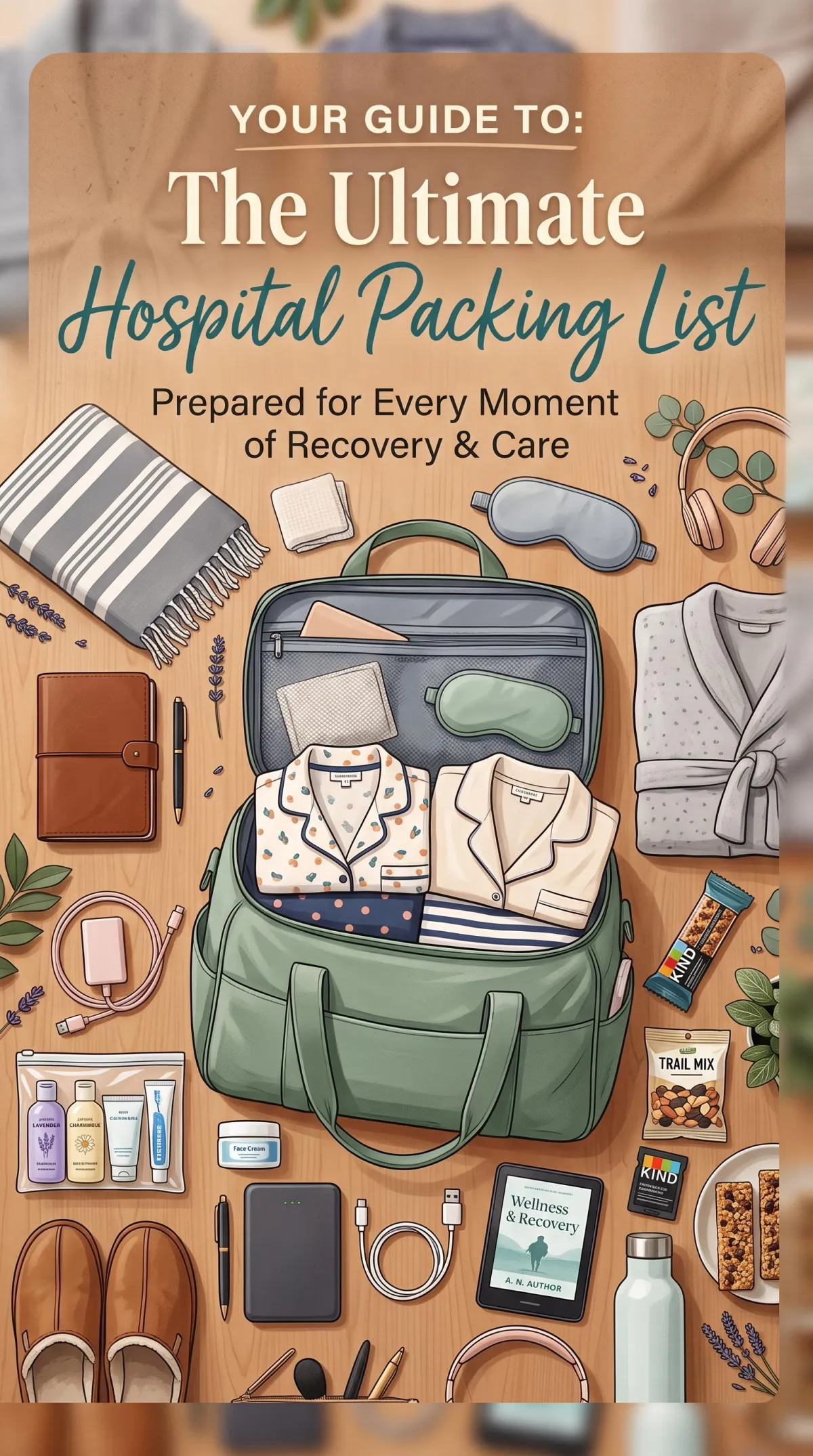
Consider packing:
Photo identification
Insurance information
Hospital registration paperwork
A current medication and allergy list
Any medications your care team has instructed you to bring
Copies of your birth preferences
Phone and a long charging cable
Emergency contact information
Glasses, contacts, and a contact-lens case
A small folder for discharge instructions and paperwork
Keep these essentials together in an outside pocket so your support person can find them without unpacking the whole bag.
Comfort Items for Labor
Labor can involve changing positions, walking, resting, showering, breathing, vocalizing, and adjusting the plan as things unfold. Pack a small selection of items that support those options.
Helpful comfort items may include:
A loose gown, robe, or oversized shirt
Nonslip socks or easy-to-remove slippers
Lip balm
Hair ties or a headband
A refillable water bottle, with a straw
A small fan
Headphones or a portable speaker
A playlist or downloaded meditation
An eye mask
A familiar pillow in a distinctive pillowcase
A massage tool or tennis ball
Unscented lotion for massage
A heating pad, if your hospital permits one
A few approved snacks for you or your support person
You do not need every labor gadget on the internet. Choose a few tools you have practiced with and understand how to use.
That practice is an important part of my Fit2Push Birth Prep approach. We can explore movement, labor positions, pelvic-floor coordination, pushing options, comfort measures, and ways your partner can support you. The goal is not to choreograph one “perfect” birth. It is to help you enter the experience with more options and a better understanding of your body.
Book a Birth Prep Consultation Call Today
Clothing and Postpartum Comfort
Your body may feel different after delivery, regardless of how your baby is born. Prioritize soft, loose clothing and easy access for feeding, medical checks, and movement.
Pack what feels useful to you, such as:
A comfortable robe or cardigan
Loose pajamas or a nightgown
A nursing or pumping bra, if desired
Stretchy, high-waisted underwear
An easy going-home outfit
Shower shoes
Toiletries
Toothbrush and toothpaste
Deodorant
Face wash or cleansing wipes
Moisturizer and lip balm
Any preferred hair-care products
A bag for dirty clothing
Many hospitals supply postpartum pads, disposable underwear, a peri bottle, and basic newborn items, but this varies. Confirm what your facility provides before purchasing or packing large quantities.
For recovery products or medications, follow the instructions of your healthcare team. A popular product is not automatically appropriate for every body, birth, incision, symptom, or medical condition.
What to Pack for Baby
Your baby’s list can be surprisingly short.
Consider bringing:
An appropriately selected and properly installed rear-facing car seat
One going-home outfit
A second outfit in another size
Socks or booties, if needed
A weather-appropriate blanket
Your pediatrician’s contact information
Any items specifically requested by your hospital
Install and practice using the car seat before labor begins. The National Highway Traffic Safety Administration recommends choosing the correct seat for your child and using it properly every time your child rides in the vehicle.
Your hospital may provide diapers, wipes, blankets, hats, and formula when medically indicated or requested, but policies differ. Ask before filling half your bag with newborn diapers.
Do Not Forget Your Support Person
Your partner or support person needs more than a charger and optimism.
Their bag may include:
A change of clothes
Comfortable shoes
Toiletries
Prescription medications
Snacks and a refillable water bottle
A phone charger
A pillow or light blanket
Cash or a payment card for parking and food
A copy of your birth preferences
Notes from your birth-preparation sessions
A list of people responsible for pets, children, or household needs
Your support person should also understand how you want to be supported. That may include offering counterpressure, suggesting a position change, protecting a quiet environment, helping you ask questions, or simply staying close without trying to “fix” every contraction.
This is where Childbirth Education becomes more valuable than another item in the bag. Education helps you and your support person understand common labor patterns, care options, terminology, comfort strategies, and how to participate in decisions when the plan changes.
My Fit2Push Childbirth Education resources are designed to help families feel informed and involved—not pressured to achieve one particular kind of birth.
[VEEDA REVIEW: CONFIRM WHETHER CHILDBIRTH EDUCATION IS CURRENTLY AVAILABLE FOR ENROLLMENT. INSERT THE APPROVED PROGRAM NAME AND LINK ONLY IF IT IS LIVE.]
What Can Stay Home?
Unless your hospital specifically recommends them, you probably do not need:
A full package of diapers
Multiple suitcases of baby clothing
Valuable jewelry
Strongly scented products
Candles or open-flame items
Your entire breastfeeding or pumping station
Every labor tool you saw on social media
Postpartum devices you have not discussed with your healthcare team
Pack for the stay you are likely to have, and identify someone who can bring additional items if your stay becomes longer.
Your Hospital Bag Is Only One Part of Preparing
A packed bag can make logistics easier. It cannot teach your partner how to support you, help you practice labor positions, or explain how breathing, pressure management, and pelvic-floor coordination may change throughout labor.
That is the difference between buying birth tools and preparing to use them.
After birth, recovery also extends well beyond the hospital. When you are medically ready, gradual pelvic-floor and core rehabilitation can help you reconnect with movement, rebuild capacity, and respond to symptoms without treating your body as broken.
My virtual Pelvic Floor and Core Rehab support is intended to meet mothers where they are, including those who need flexible guidance from home.
Frequently Asked Questions
When should I pack my hospital bag?
Many families begin gathering items during the third trimester and have the essentials ready several weeks before the estimated due date. There is no universal deadline. Your healthcare provider may suggest packing earlier based on your pregnancy, travel distance, birth history, or medical situation.
Does the hospital provide postpartum supplies?
Many facilities provide basic recovery and newborn supplies, but the exact items and quantities vary. Contact your hospital or birth center for its current list.
Do I need a formal birth plan?
No. A short birth-preferences document can still be helpful because it gives your care team and support person a starting point for conversations. Birth preferences should leave room for new information, medical needs, and changes in your priorities.
Should I bring my breast pump?
Ask your hospital. A pump may be available if it is needed, and some families do not need to bring one. Your care team or lactation professional may recommend bringing your own pump if you need help with its specific fit or setup.
Ready to Pack?
Start with the essentials, confirm what your hospital supplies, and choose comfort tools that make sense for you.
You can browse my curated hospital-bag and birth-preparation shopping list on Amazon for ideas. You do not need everything on the list—select what supports your preferences and leave the rest.
For more practical pregnancy, birth, postpartum, pelvic-floor, and motherhood-performance education:
Your bag does not need to be perfect. It simply needs to support you—and make sense to the people who may have to find your lip balm while you are busy having a baby.
This article provides general education and is not individualized medical advice. Hospital policies and personal medical needs vary. Follow the recommendations of your obstetric provider, midwife, pediatric clinician, hospital, and other members of your healthcare team.