Constipation
Constipation and the Pelvic Floor: More Than Just a Digestive Issue

Introduction
Constipation isn’t just uncomfortable—it can significantly affect quality of life and pelvic floor function. Whether it’s feeling like you can’t fully empty, straining on the toilet, or going several days without a bowel movement, constipation is a signal from your body that something isn’t quite in sync. This blog explores the pelvic floor's critical role in healthy elimination and what you can do to restore ease and regularity.
Understanding Constipation
Constipation is often defined as having fewer than three bowel movements per week or experiencing hard, dry stools that are difficult to pass. If you look at the Bristol Stool Scale above which one does your bowel movement look like? For many, it’s more about the sensation of incomplete emptying, frequent straining, or discomfort with elimination and bloating.
One commonly overlooked contributor? Pelvic floor muscle dysfunction—specifically, a condition called dyssynergic defecation, where the pelvic floor muscles don’t relax properly during a bowel movement.
How the Pelvic Floor Impacts Bowel Movements
During a healthy bowel movement, the pelvic floor muscles (especially the puborectalis) should relax to allow stool to pass easily. If those muscles remain tight or are poorly coordinated, it can create a mechanical obstruction—making you strain, hold your breath, or spend too much time on the toilet.
Signs Your Pelvic Floor Might Be Contributing to Constipation:
Frequent straining during bowel movements
Sensation of incomplete emptying
Using your breath or body to push
Needing to change positions or use digital stimulation
What Can Help?
Pelvic floor physical therapy addresses both the muscle coordination and behavioral aspects of constipation. Treatment may include:
Breath and posture retraining
Manual therapy and release work
Training the pelvic floor to relax on cue
Education on toileting mechanics (think: footstools and squatting!)
Additional Lifestyle Tips:
Hydration: Aim for at least 8 cups of water daily
Fiber: Slowly increase fiber intake through fruits, veggies, and whole grains
Movement: Gentle daily exercise supports digestive motility
Routine: Establish a consistent time to sit on the toilet, ideally after meals
Tips:
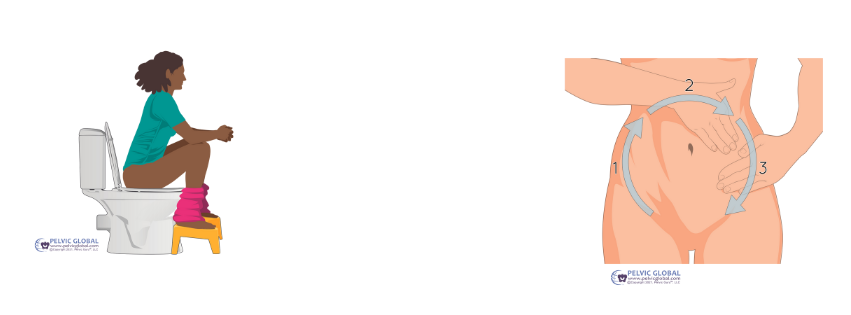
Try this one tip to help relieve your constipation today:
Bowel Massage
Toileting Positioning
Lower Trunk Rotation 10 reps 3x
Cat/Cow 10 reps 3x
Diaphragmatic Breathing 2 minutes 2x a day.
You Deserve to Poop Comfortably
Constipation doesn’t have to be your norm. If your gut and pelvic floor aren’t working together, it’s time to restore that connection. With the right support, relief is possible—and lasting. Book your free 30 minute consultation today.