Making Space in the Pelvic Inlet
Making Space in the Pelvic Inlet: The First Critical Step to a Smoother Labor
If you are currently pregnant, you’ve likely been told that to prepare for birth, you need to "open your pelvis or make space in the pelvis."
But as a pelvic floor physical therapist and birth doula, I want to let you in on a major clinical secret: Your pelvis is not just one uniform hoop. It is a dynamic, multi-layered bony canal that changes shapes at different stages of labor.
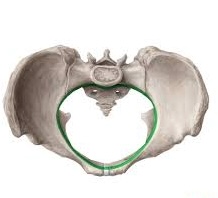
When your baby is preparing to enter the birth canal, they must pass through the very top opening first—this is known as the Pelvic Inlet. If your pelvis is structurally tucked, rigid, or unaligned, accessing that top space becomes incredibly difficult, which can lead to prolonged early labor, stalls, or intense back discomfort.
Let’s dive into the anatomy of the pelvic inlet, how your posture might be blocking your baby, and how we can physically make space for an easier descent.
Anatomy 101: What and Where is the Pelvic Inlet?
Think of your pelvis like a funnel.
The Pelvic Inlet is the top rim of that funnel. It’s the gateway your baby must cross to enter your true pelvis (engagement).
The Pelvic Outlet is the very bottom of the funnel—the bony exit space your baby passes through during the pushing stage.
Here is the trick: The movements that open the top of your pelvis actually close the bottom, and vice versa.
To allow your baby’s head to tuck, engage, and drop into the pelvic inlet during late pregnancy and early labor, we need to maximize the space from front-to-back and side-to-side at the top of your pelvis.
The Posture Trap: Why Your Baby Might Be Floating High
During pregnancy, your center of gravity naturally shifts forward as your belly grows. To keep from falling over, many moms unconsciously default to a specific postural strategy: they heavily arch their lower backs, flare their rib cages, and lock their hips out.
When you stay stuck in this anterior pelvic tilt, you physically narrow the front-to-back diameter of your pelvic inlet. Your deep hip rotators and pelvic floor muscles grip for dear life to keep you stable.
Because the gateway is narrowed and braced, your baby has a harder time dropping down into the pelvis. This is why some moms experience a baby that stays "floating high" even as their due date approaches.
We don't need to just wait around and hope gravity does all the work. We need to use biomechanics to change the shape of your bones.
How to Make Space in the Pelvic Inlet
To open the pelvic inlet, we need to create relative external rotation at your hips and a gentle widening of the top of the sacrum (the base of your spine). Here are three physical birth prep strategies we use to make space:
1. Master the Posterior Pelvic Tilt
To unlock the top rim of your pelvis, you have to know how to gently tuck your tailbone and stack your ribs directly over your hips. Moving your pelvis into a posterior tilt physically opens the front-to-back space of the inlet, giving your baby’s head a clear path downward.
2. Utilize External Hip Rotation (Knees Out, Ankles In)
When you sit or rest with your knees wide and your ankles turned inward, it causes the top of your hip bones (the ilia) to flare outward. This structural shift instantly widens the lateral diameter of your pelvic inlet. This is a fantastic strategy for early labor or when you are resting between contractions!
3. Open the Thoracic Wall (Rib Mobility)
Your pelvic floor moves in absolute harmony with your diaphragm. If your rib cage is completely stiff and flared from pregnancy, you cannot manage intra-abdominal pressure properly to guide the baby down. True inlet prep always includes restoring lateral rib cage mobility.
Childbirth Class vs. Physical Birth Prep
This is exactly why generic childbirth education and actual physical birth preparation are completely different things.
A standard hospital class will teach you the theory of how a baby descends through the pelvis. But theory won't open your hip joints or soften a hypertonic pelvic floor when you are navigating real-world contractions.
Motherhood is an athletic event, and labor is the ultimate marathon. You deserve a specialized roadmap that trains your muscles, joints, and nervous system to physically create space when it matters most.
Build Your Custom Birth Blueprint
Whether your goal is an unmedicated birth, an epidural, or a scheduled Cesarean, preparing your pelvic biomechanics completely changes the game.
Let's stop guessing with your prenatal movement and get your system aligned:
In-Home Concierge Care (Mercer County, NJ): I bring specialized Doctor of Physical Therapy evaluations and hands-on birth prep directly to your living room in Ewing, Princeton, Pennington, and surrounding areas.
Virtual Birth Prep Coaching: We can hop on a screen together from anywhere in the world to assess your alignment, map your pelvic mobility, and design your custom labor-positioning guide.
🔗 Click Here to Book Your Free 15-Minute Consultation Call and let's start making space for your baby!